
Marine Mammals
 1 comment
 Each year on the cruise, we are privileged to have many encounters with marine mammals — mammals that live and feed primarily in the ocean. Mammals originally evolved on land and a subset later adapted to life in the sea. Unlike other marine life, marine mammals breathe air, rather than extracting oxygen from the water, they have hair (even whales have bristles!) and thick layers of fat under the skin called blubber to insulate their warm blooded bodies. Marine mammals also give live birth and rely on milk to feed their young — milk that is up to 50% fat in content!
At Palmer Station, we saw many Southern Elephant seals, which haul out on land this time of year to rest and molt their fur. Males, the larger of the genders, can get up to 21 feet long and weigh as much as 6000 lbs!
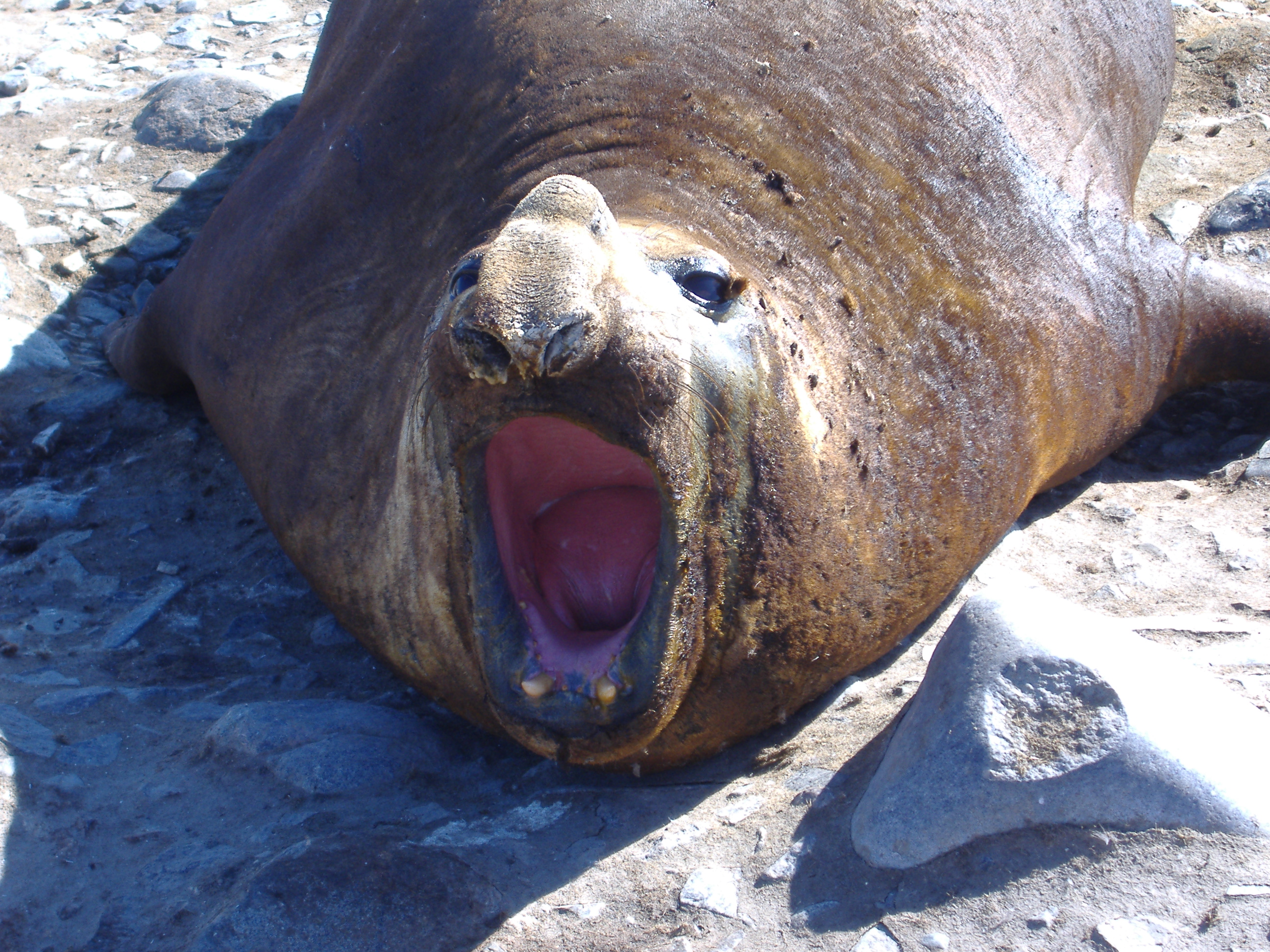
Southern Elephant Seal (Mirounga leonina)
Elephant seals eat primarily fish and squid and have amazing eyesight adapted to deep diving, up to 1000 feet deep.
Leaving the Palmer area, we transited through many areas covered in icebergs and the remnants of last winter’s sea ice. We often spot seals and penguins lounging on these bits of ice, and this year were lucky to see two species of true seals (true meaning they have internal ears and are not jointed at the hips such as sea lions.)
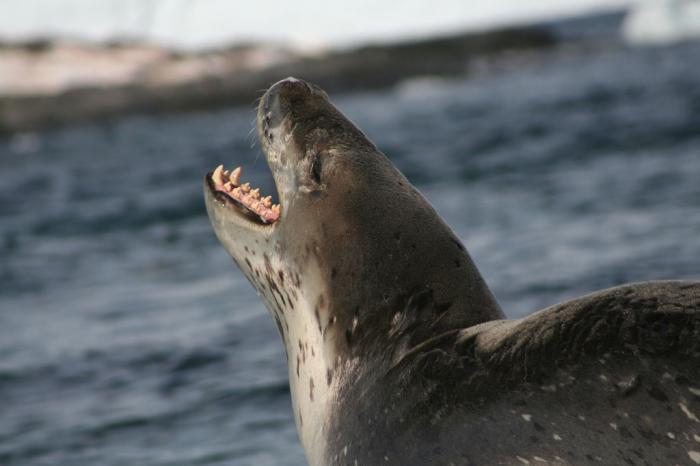
A leopard seal (Hydrurga leptonyx) showing its teeth. Photo by Chad Rosenthal.
Leopard seals are a silver gray color with a serpentine head and huge masseter muscles. They are opportunistic foragers feeding on fish, krill, other seals and penguins.
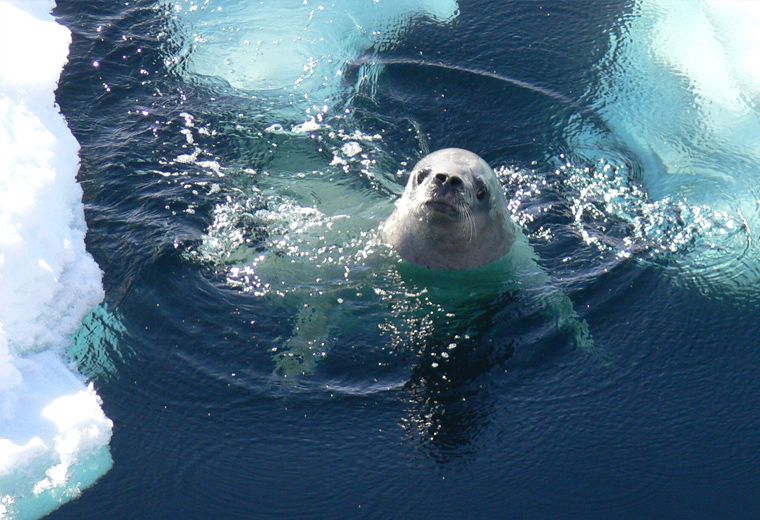
Crabeater Seal (Lobodon carcinophagus) Photo by Nicholas Metheny.
Though the name is deceiving, crabeater seals do not eat crabs; instead, they eat mainly krill. Like Adelie penguins, they are a sea-ice-dependent species found only in the Antarctic. Their teeth are beautifully cusped, acting as a strainer that retains the krill.
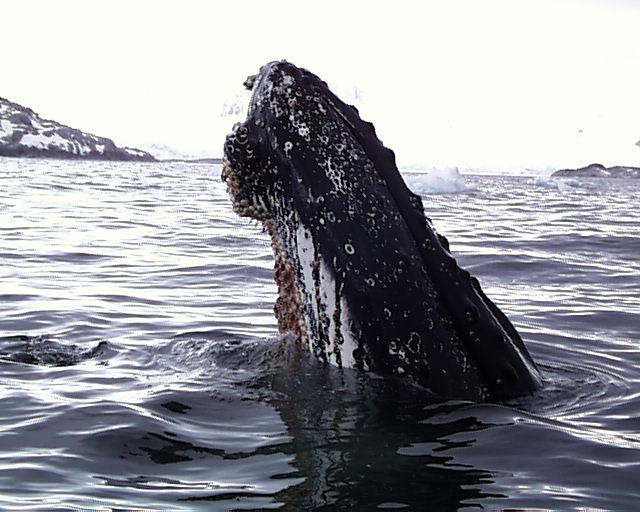
Humpback Whale (Megaptera novaeangliae)
Though much larger – reaching at times 50 feet in length – the humpback whales also eat mainly krill and other plankton or small fish, straining out their prey with baleen. One method they employ to catch their prey involves spiraling up and down in dense schools of plankton which creates bubble nets that concentrate their prey. Individual whales are recognized by scientists by the unique patterns of black and white on their tail or fluke, like our fingerprints.








Hi Maria,
It’s Nicholas Metheny from the L.M Gould, one of the seabirders. I was wondering if you could be so kind as to credit my name to the Crabeater seal photo you have posted on icestories.exploratorium.edu/…/marine-mammals/. I took the original and would greatly appreciate the recognition, as I am trying to get into wildlife photography.
Thank you.
Sincerely,
Nicholas Metheny